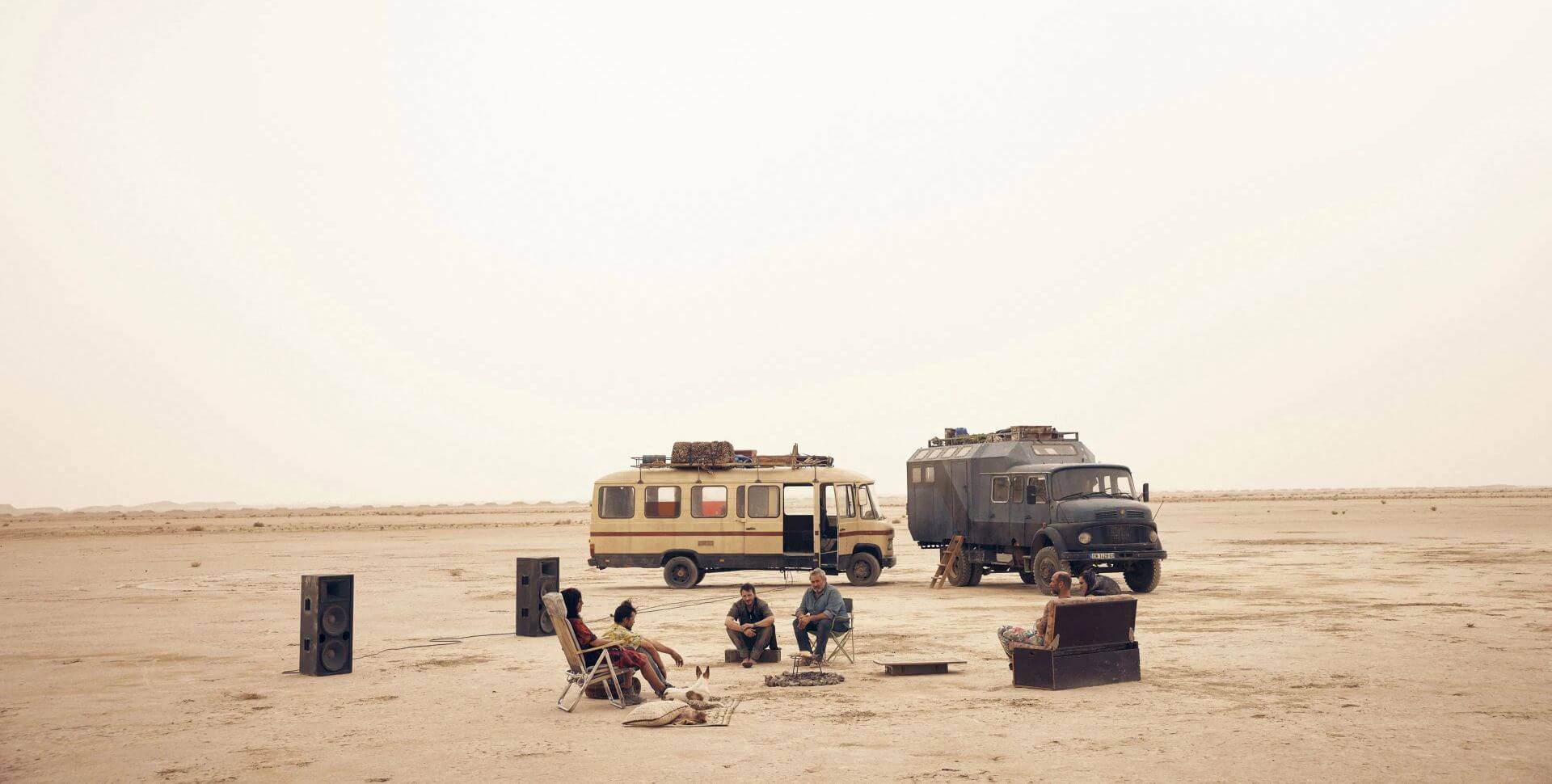
Armed with just a backpack and a beatdown car, a father (Sergi López) sets out with his son (Bruno Núñez Arjona) to the sandy depths of Morocco. As he seeks to find his missing daughter, Maria, he walks past one hallucinatory rave party after another. But when the country falls under a military crisis, the stakes for survival increase (even if the raving doesn’t stop).
Sirât has all the breathless thrills and technical pizzazz to deliver a nightmarish road trip. Right from the very first desert raves, it’s clear that writer-director Óliver Laxe’s Cannes-winning Spanish feature is the kind of film that prioritizes sensory overload over multi-layered storylines. There’s nothing wrong with that, as cinephiles have long been frothing over auteurs like Gaspar Noé making a career out of “vibes cinema”. With a foot-thumping electronic score by Kangding Ray (one of the biggest snubs this Oscar season), Sirât is quite the party to join. And even when matters turn chaotic, the Oscar-nominated trio of sound artists Amanda Villavieja, Laia Casanovas, and Yasmina Praderas elevates sound design to a hypnotically addictive drug. Throw in the haunting desert landscapes with occasional buried mines and a deliberately vague subplot of a military coup, and you have a film that makes for an undeniably immersive experience, especially if you’re lucky enough to catch it on an IMAX screen.
No shortage of aesthetics and chaos, but where is the soul? And despite its exceptionally singular style, Sirât is rarely ever focused on building any true connections with its audience. Whether or not it was Laxe’s intention, Sirât feels like the exact kind of edgy film festival darling that prides itself on alienating and dividing its viewers. As the middle-aged dad hero’s journey takes him through some hellish desertscapes, the film transcends into darkly comic moments laced with the nihilistic absurdity of a Kafka or Camus story. There’s no method to the madness, which, again, seems apt for a style-over-substance experiment like this, but by the time the explosive third act arrives, you can’t help but sigh at the pointlessness of it all. Some might argue that it’s a subversive statement of defiant cinema, the kind that disguises itself as a survival drama, a road movie, or a psychological thriller and refuses to bow to the cliches of any subgenre. The central father-son duo does make you empathise initially, but as they just cower around each of the thinly written, one-dimensional ravers, you can’t help but empathise with anyone at all.
Maybe no point was ultimately the point. Not to delve into spoilers, but even when the worst thing imaginable happens to some of these characters, all you can do is chuckle (with even the chuckle-worthy moments eventually growing monotonous). So, clearly, with its exhausting vagueness and stylish pointlessness, even the seemingly interesting subplots fail to raise any eyebrows. What really happened to Maria? What is that Moroccan military coup forming the backdrop of this sand-soaked nightmare? Do the European ravers partying in a warzone serve a larger commentary on settler colonialism? Was there even a point to it all? The visual and sonic magic of Sirât might have worked on some who might assert that having no point was ultimately the point. And indeed, life can be unpredictably grim as this film’s more shocking twists unfurl. But much like its central protagonists, searching for any meaning beyond the aesthetics is like being fooled by a shimmering mirage in a dry desert. Ultimately, that’s what Sirât is. A really well-made music video in the desert.
Undeniably well-made and immersive, Sirât works as a chaotic comedy of errors but fails to justify its existence with a frustratingly soulless plot, a vaguely political backdrop, and fairly forgettable characters. Maybe, this aesthetic music video of a film is just for the ravers and sound design fanatics.

Sirât is showing in theaters now.