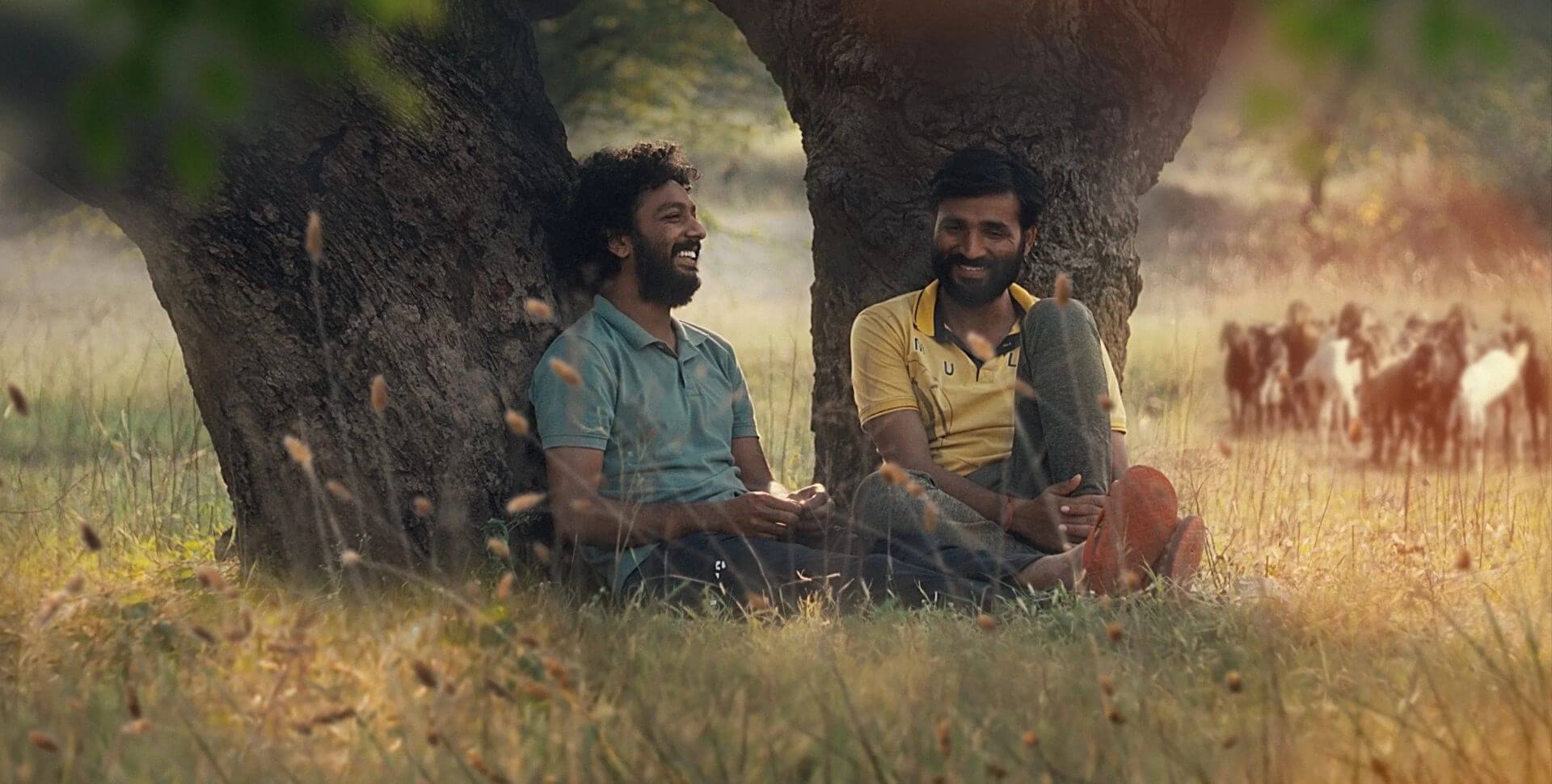
Rohan Kanawade’s Sundance and SXSW-winning queer drama Cactus Pears follows the homecoming of a Mumbai local, Anand (Bhushaan Manoj), who returns to his village to complete the funerary rites of his recently deceased father. As Anand tries to confront his own grief while ignoring nosy relatives bothered about his marriage, he also rediscovers an old bond with his closeted childhood friend Balya (Suraaj Suman).
A bittersweet funeral sets the stage for a tender story of male camaraderie and queer love. Cactus Pears, or Sabar Banda as its original Marathi-language title goes, is the kind of funeral film that demands your tears but also extracts a smile or two out of you in the process. With the protagonist’s father’s demise established right from the opening frame, Cactus Pears plays out on a melancholic note with prolonged silences sans any sentimental music or dramatic outbursts. The characters cry but also grieve with muted sighs, channeling their burdens from even before the tragedy. Anand, who is out to his mother but closeted from the rest of his extended family, is numb to the claustrophobic dinners where the agenda is discussing his marital future. Meanwhile, his mother (Jayshri Jagtap) still depends on this invasive bunch of relatives to grapple with her own domestic loneliness set in by the patriarchal system she wedded into. Writer-director Rohan Kanawade allows enough breathing space between such characters without overdoing the trauma tropes. Despite a hyper-realist lens, Kanawade doesn’t let these protagonists wallow in sadness all the time either. Saman’s easygoing, charismatic turn as the hero’s old flame Balya is a good refresher, particularly in the long take sequences that map out their journeys around the rural hinterland. Splashing water on their bare-chested torsos, feasting on prickly but sweet “cactus pears”, and riding a motorcycle down to quieter spots where they can be alone, the film takes a slice-of-life approach to replace its overarching sadness with a newfound life.
The silences do the most talking. Queer cinema from the Indian subcontinent, much like other parts of the world, often tends to highlight same-sex relationships through the lens of traumatic homophobic violence or a glossy urban modernity that feels superficial. But Kanawade doesn’t wish to make his lovers yearn like they’re in a “desi” Brokeback Mountain, all the while ensuring the idyllic village setting doesn’t give way to an exoticized portrait of rural India. But in just celebrating his closeted protagonists at their own pace and comfort level (including a full-frontal sex scene that’s rare for Indian gay films), the jolly moments themselves feel more radical than any forced social discourse amidst the family or any shocking reveals of the ugly truths of society. A similar balance is evident in the way the film frames its village setting. Yes, some of that idyllic pace of each day is evident in the slow, summery sound design, but there’s no attempt to exoticize life outside the big city either. The city-returned Anand might be more confident in his sexuality, while Balya might not have the exact vocabulary to convey his desires, but there’s no attempt to dramatically showcase any stark contrasts. Kanawade yet again prioritizes long silences over explicitly stating the subtext or manipulating the audience’s emotions with preconceived urban-rural notions.
The kind of slow cinema that can divide audiences, but if you stick around, you might find catharsis in the silences. While the prolonged moments of absolute stillness elevate the film beyond its emotional, tender, and occasionally surreal moments, it’s also silence that can alienate some audiences. With the camera solely focusing on a sun-scorched field or a tree dwarfing our two lovers underneath, the single take can last for a frustratingly long eternity. It arguably fits in with the slow-burning tone of the film’s overarching themes of grief and subsequent catharsis, but it’s bound to alienate some viewers and come across as a forced attempt to inject poetic meaning into each still frame. But if you can get past these unabashedly arthouse-coded barriers like the prickly layers of a cactus pear, you might just be rewarded for your patience with a sweet, sweet aftertaste.
Tender like the fleshy interior of its titular prickly fruit,
Cactus Pears is a bittersweet exploration of a queer son’s grief and the healing that follows.
